Every construction project starts with an estimate, as nothing in construction moves forward without numbers. Detailed construction cost estimating is the secret to a successful project, and it may determine whether a job ends in profit or in loss.
It’s challenging to consider every detail for one project, but for multiple jobs, it takes even more effort. Each may have its own level of complexity and unique requirements.
One thing in common for all is to stay on budget within the deadline and ensure that the work turns into a profit. None of this is possible without accurate construction estimating.
This guide will explore the fundamentals of construction estimating, challenges contractors face, practical tips, and how construction estimating software can help.
Construction estimating is the process of forecasting the total cost required to complete a construction project. This involves calculating all anticipated expenses before the job starts.
Why It Matters
The main goal is to provide the most detailed plan possible. Think of it as a financial blueprint. Without it, you’re essentially building blind. A solid estimate is about more than predicting costs, as it provides a clear plan that makes a project both achievable and profitable.
Beyond budgeting, estimating plays a big role in landing a project. It all starts with a rough estimate and eventually becomes a polished proposal. An accurate estimate can be the deciding factor for a homeowner choosing between contractors. That’s why owners and contractors alike depend on estimates to guide a project from preconstruction to completion.
Who is Responsible for Construction Estimating?
Construction estimating can be done by either a general contractor or a professional estimator. This depends on the company size and the projects it’s running. Some building firms hire or outsource a dedicated estimator who handles the job.
Why Estimates May Go Wrong
Inaccurate estimates can derail a project faster than any other unpredictable factor. A well-prepared one ensures financial stability for a general contractor and strengthens client trust.
A clear estimate pays off after launching a project, as with the right numbers, it takes less effort and time to line up crews and order materials.
Key Challenges in Estimation
Doing calculations is not that easy, especially when there are some unpredictable points to consider. Let’s see which are the most important issues that may affect general contractors’ plans.
Material Price Fluctuations
One day, your material costs look solid. In several days, prices spike because of supply chain disruptions or market demand. The same applies to equipment prices. Limited access to necessary equipment or unexpected rental price increases can affect the costs. Suddenly, your carefully crafted estimate feels outdated, and you struggle to cover the gap.
Skilled Labor Problems
Good workers aren’t always easy to find. One of the hiring challenges the industry faces is labor shortages. Finding qualified workers at the right time and rate is a struggle. Besides, some tasks can require specialized skills that are hard to source.
Scope Creep
Clients change their minds. Besides, designs can change, the construction may expand, or unexpected site issues may pop up. Without tight control, these changes can snowball, driving costs and timelines beyond original plans.
Inaccurate Quantity Takeoff
Errors in measuring or counting materials and labor needs can throw off an entire estimate. Overlooking small details in the takeoff phase can lead to costly issues once construction is underway.
Using Disconnected Tools
There are many estimating tools in the market, but not all may fit your accounting or project management software. That forces your team to re-enter the same data multiple times at different stages of the project. Every manual transfer is a chance to make a small error, which is likely not to stay at the estimating phase but flow into the final invoice.
And do not forget about the price, as paying for different tools or adding integration add-ons may have a heavy impact on contractors’ costs.
Key Elements of a Construction Estimate
Every solid estimate is based on some important elements that make a project happen. It includes the wages a general contractor pays the crew, equipment costs, and other expenses.
For a contractor, an estimate is a stack of carefully calculated components that build on each other. Missing one layer, and the whole structure is off. Here’s what every solid estimate is made of.
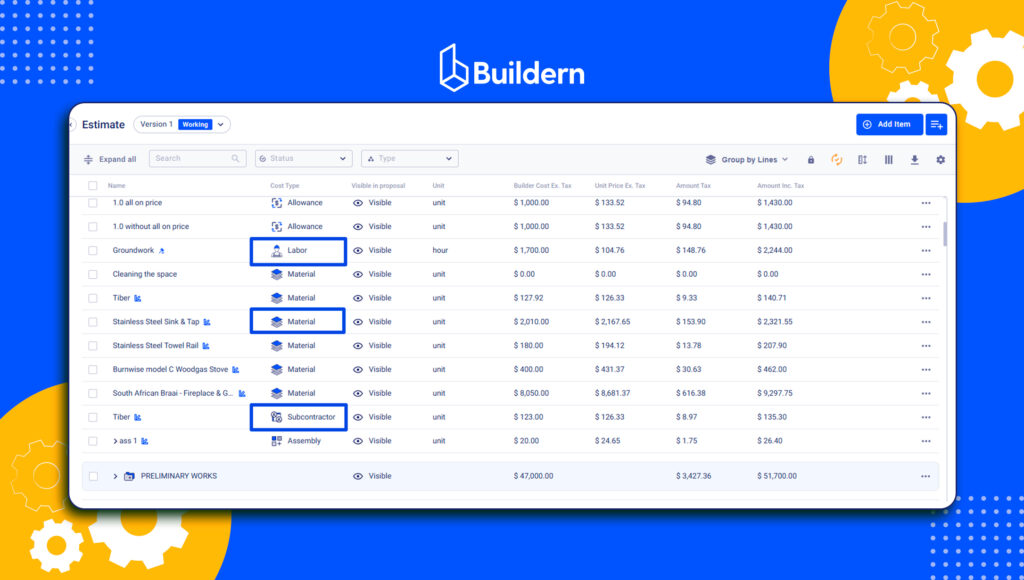
Direct Costs: These expenses refer to physical items like equipment rental and materials. Besides, they include costs that are tied to building the project, including wages of in-house workers, subcontractor fees, transportation of materials, etc.
Indirect Costs: They cover everything that supports the project but isn’t physically built into it. Those are site utilities, cleaning, temporary facilities, administrative expenses, and software fees. They may not be visible at first, but without these costs, the project will not run smoothly.
Labor
This is one of the largest cost variables in any estimate. For contractors, labor costs are arguably the hardest cost to get right. When calculating the labor costs, the availability of workers, their productivity, and overtime affect the final number.
Materials
Material costs are driven by the material takeoff. The more precise the measurements, the more accurate this figure will be.
Equipment
Include costs for purchasing, renting, transporting, and maintaining any equipment the project requires. There is also fuel, operator time, and mobilization costs.
In construction, everything can change every minute. When discussing the design and scope of the project, a risk buffer is included in the estimate. For example, it can be a contingency, a predetermined amount to cover potential risks. Another option is allowances, a budget allocated at the beginning of a project for items with variable costs.
In construction, this is the percentage added to your project’s direct costs to cover overhead, indirect costs, and profit. Overhead includes everything from office rent and insurance to software subscriptions.
Not every proposal based on the estimate will include allowances, contingencies, or markups. This often depends on the project scope, contract type, and the agreement between the contractor and the client.
Types of Construction Estimates
The American Society of Professional Estimators defines five types of estimates. Each serves a specific stage of the project. Important note here is that not every project goes through all stages and it depends on the project scope and type.
Order of Magnitude Estimate
This is an early-stage estimate. Its purpose is to give a broad overview of the costs when the project design isn’t yet available. This is a rough calculation largely based on contractor experience and limited project details. It helps decide whether a project should proceed or be postponed.
When it is used: During project feasibility discussions, initial client consultations.
Schematic or Intermediate Design Estimate
This type of estimate is created when the schematic design is ready, but the detailed design isn’t complete. As compared with the previous type, it includes more factors. For example, this refers to room layouts, basic dimensions, and key system outlines, giving a clearer cost picture.
When it is used: During the design phase when owners need a more realistic budget before investing in detailed plans.
Design Development Estimate
This one contains more information as it’s created once the initial design is ready and the scope is well-defined. Contractors can include specific materials, labor requirements, and potential changes. This estimate requires deeper analysis to improve accuracy.
When it is used: When project teams are refining designs, selecting materials.
Construction Document Estimate
This type delivers a near-final cost calculation based on final blueprints and technical drawings. There are already exact dimensions, specifications, and construction details. At this stage, contractors can make confident budget and scheduling decisions.
When it is used: Drawings are finalized and you’re moving into procurement and scheduling. This is the estimate you present to a client or lender.
Bid Estimate
The most precise estimate is that prepared right before submitting a bid. It includes all previous data, final documents, and bid requests to produce a detailed breakdown. Owners rely on this to compare bids and select a contractor.
When it is used: While submitting a proposal for a competitive tender, negotiated contract, or final project pricing agreement.
Step-by-Step Construction Estimating Process
Estimating is a solid process that breaks a complex job into clear steps so you can spot risks early. Each stage builds on the last, turning initial ideas and rough figures into a detailed, reliable cost plan. By moving from reviewing the project scope to applying markups and finalizing numbers, you set the stage for sending a proposal and starting the project.
Project Review and Scope Analysis
Start with the analysis of the project. It is the first step in creating an accurate construction estimate. Initial review involves studying the project drawings, specifications, and requirements in detail.
A general contractor should clarify any unclear points with the homeowner, architect, and engineer. It’s essential to ensure that you fully understand the client’s vision before moving forward with measurements.
In practice: At this point, it’s important not to rush. A thorough scope review at the start saves three hours of back-and-forth corrections later. If something in the drawings is unclear, ask before estimating.
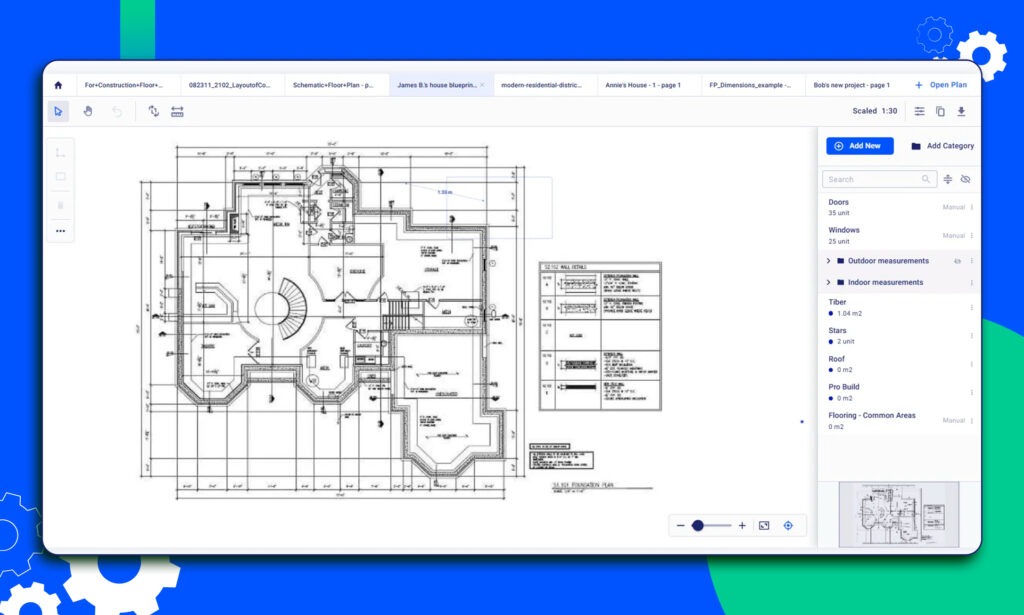
Quantity Takeoff
This is a critical step in construction estimating and is a background for the right calculations. Without accurate quantities, even the best bids can fall apart once construction starts. Takeoff involves measuring and listing all the materials, labor, and equipment needed to complete a project.
A good takeoff process gives your team clear numbers before sending bids, planning, and scheduling confidently. This used to be done manually or with the help of digital tools to speed things up.
In short, quantity takeoff turns an abstract plan into real-world costs. In the case of using construction management software, takeoff can also be based on measurements from existing or new projects you already have. This saves time and resources when creating a new one.
In practice: The accuracy of your takeoff when doing it with the construction software depends entirely on getting the scale right before you measure anything. The scale is usually printed on a plan, and if it’s not, draw a reference line on a known dimension, and the system will calculate it.
Setting Up an Estimate
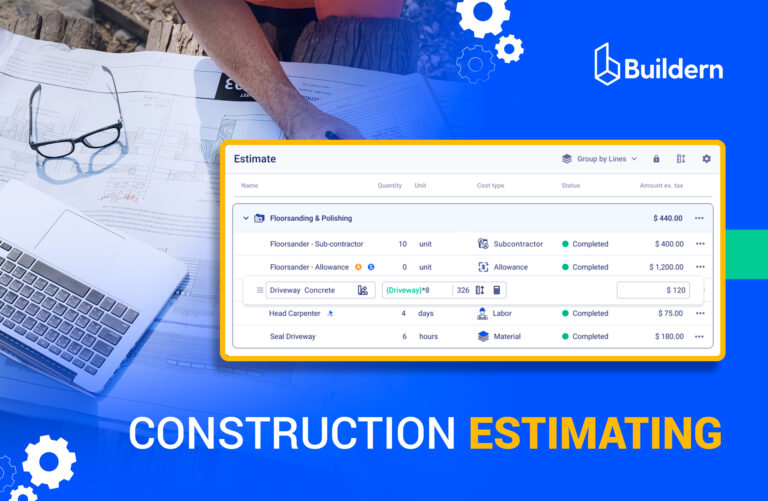
The format of the estimate you choose can vary widely depending on the process and tools. Some contractors prefer doing estimates manually, using spreadsheets. Others rely on specialized construction estimating software that makes the process much easier.
If you’re working manually or with spreadsheets, you might create separate sheets for different parts of the project. It tracks quantities, costs, and labor in organized tabs. This approach offers flexibility, but as the number of projects grows, it becomes more complex.
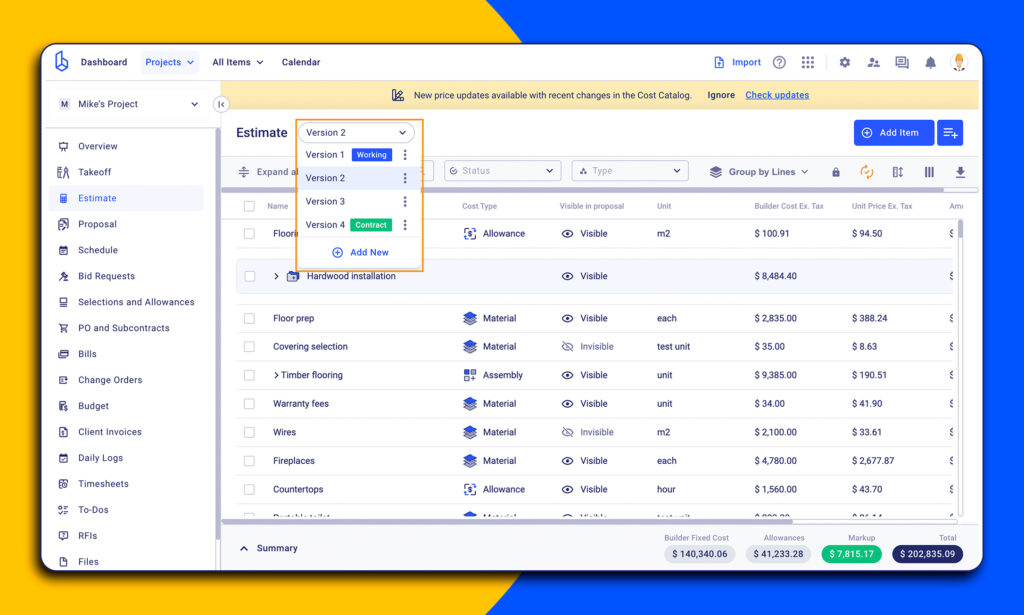
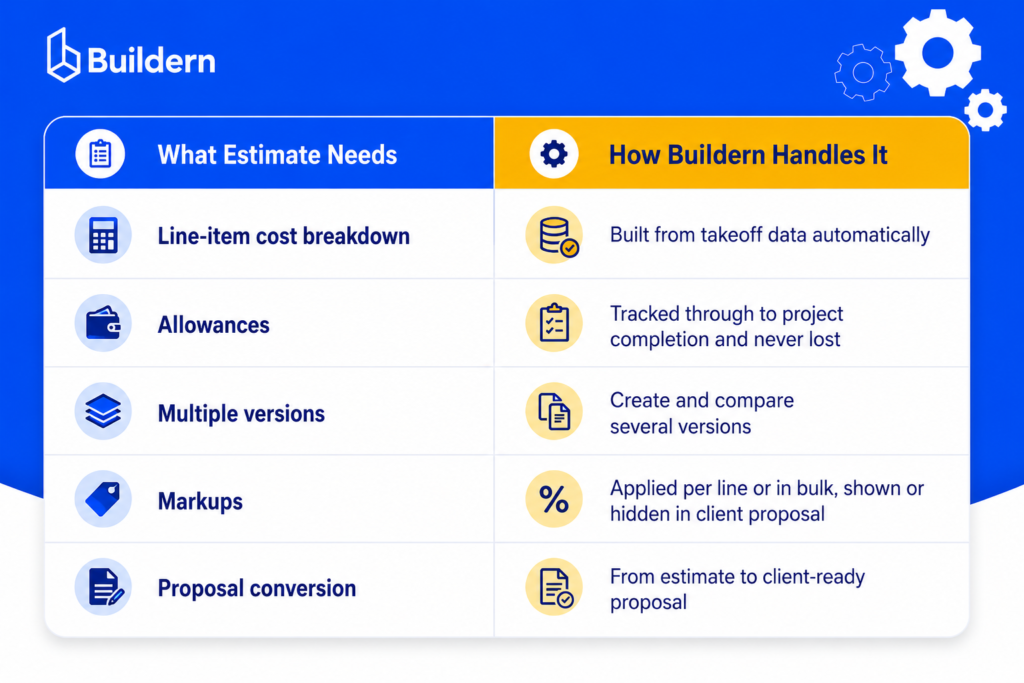
Digital tools, on the other hand, allow a builder to create multiple versions of an estimate within a single project. Why is it easy? It lets you compare options, adjust quantities, or update prices without starting from scratch. At the same time, you have several internal options, and then decide which one you are going to transform into a proposal.
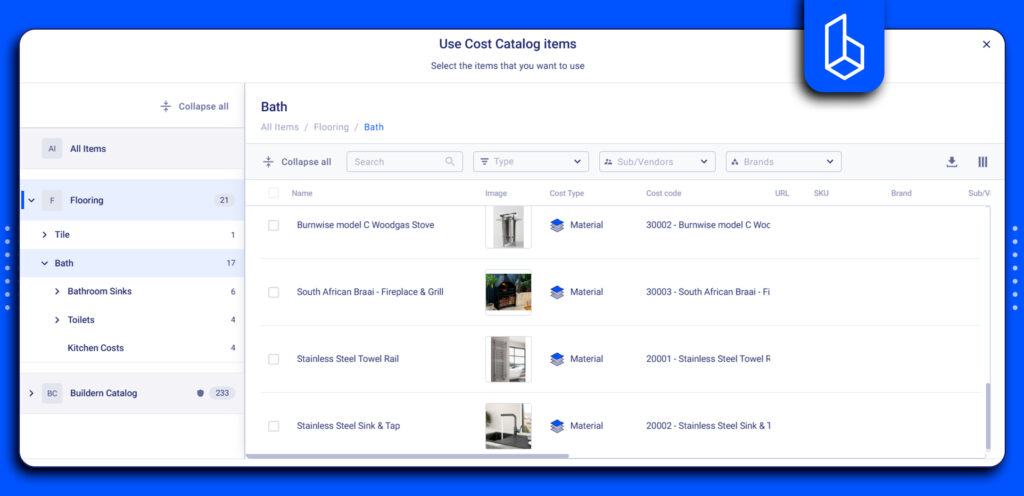
In practice: The fastest way to set up a new estimate isn’t starting from scratch. You can copy from a previous project or pull from your cost catalog. If you’re re-building the same assembly of items on every similar job, you’re losing time you can’t bill for. Save any item or assembly to the catalog once, and every future estimate pulls it in with quantities, units, costs, and markups already filled.
Sending Bid Requests
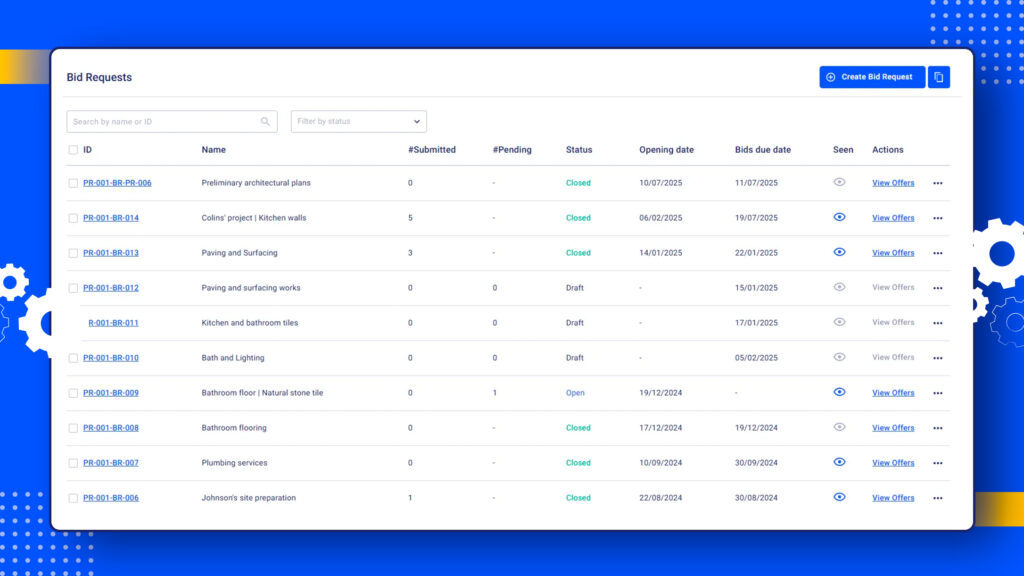
Accurate estimates depend on real market data. The next step is sending bid requests to subcontractors and vendors for specialized labor, materials, or equipment.
Large projects sometimes require numerous requests and the storage of data wisely. Each quote can include item descriptions, maximum unit and total prices, visual references, and required files.
Vendors and subs receive the request via email or immediately through the same construction software.
In practice: When quotes come back, it’s better not to compare vendor totals in isolation. Use the compare list view. In Buildern, for example, it breaks pricing down line by line across all vendors simultaneously. This matters because the cheapest overall vendor isn’t always the cheapest on every item.
Price Materials, Labor, and Equipment
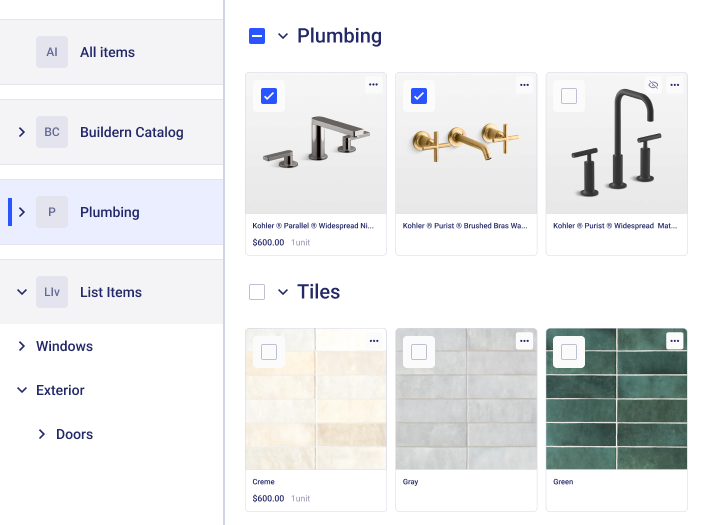
This is one of the steps that requires attention to detail in the estimating process. A common way to automate this process is to use a construction cost catalog and generate an estimate based on this.
This is a centralized database of current prices for materials, job costs, and equipment costs. Using software, it’s possible to quickly import lists from subcontractors and vendors and create price lists for cost updates.
For labor, include both hourly rates and required hours for each role to help clients understand exactly where the budget is going.
For materials, rely on your takeoff measurements and cost catalog entries, but leave room for price fluctuations.
For equipment, list costs for purchasing, renting, transporting, and maintaining. In many cases, renting, especially for specialized or rarely used machinery, can be far more cost-effective than buying.
The estimate made with digital tools includes all this information and the client can see the price and fee of each item.
In practice: At this point, a cost catalog becomes essential. If you’re pricing materials, labor, and equipment from scratch on every estimate, you’re spending hours on work you’ve already done before. It’s better to have them all in the cost catalog to simplify estimate generation.
What Is a Cost Catalog and How Does It Save Time?
Earlier in this guide, the cost catalog was mentioned as a key part of pricing materials, labor, and equipment. It’s worth stopping here to explain what it actually is. For contractors who haven’t used one, it’s one of the biggest practical shifts in how estimating works day to day.
In general, the cost catalog is not a generic industry database of average rates but a contractor’s personal price book. It contains your prices, your suppliers, labor costs, and markup, organized into a library you build once and use on every project after that.
Let’s see how it works in Buildern. If you build residential homes and you regularly estimate timber framing, you can use a cost catalog to make it simple. Instead of repricing every stud or labor hour from scratch each time, you save those items to your catalog once. It includes the supplier’s current rate, the crew’s install hours, and your markup already applied. For the next project, you pull the framing items into the estimate, adjust the quantities for that specific job, and you’re done. The pricing foundation is already there.
It saves the most time when prices change. Material markets move fast, sometimes on a weekly basis. Without a catalog, a price change means searching through every open estimate and updating line items manually.
With a dynamic catalog, you update the price once, and Buildern prompts you to apply that change to every existing estimate using that item. One update keeps every estimate current.
Include Allowances
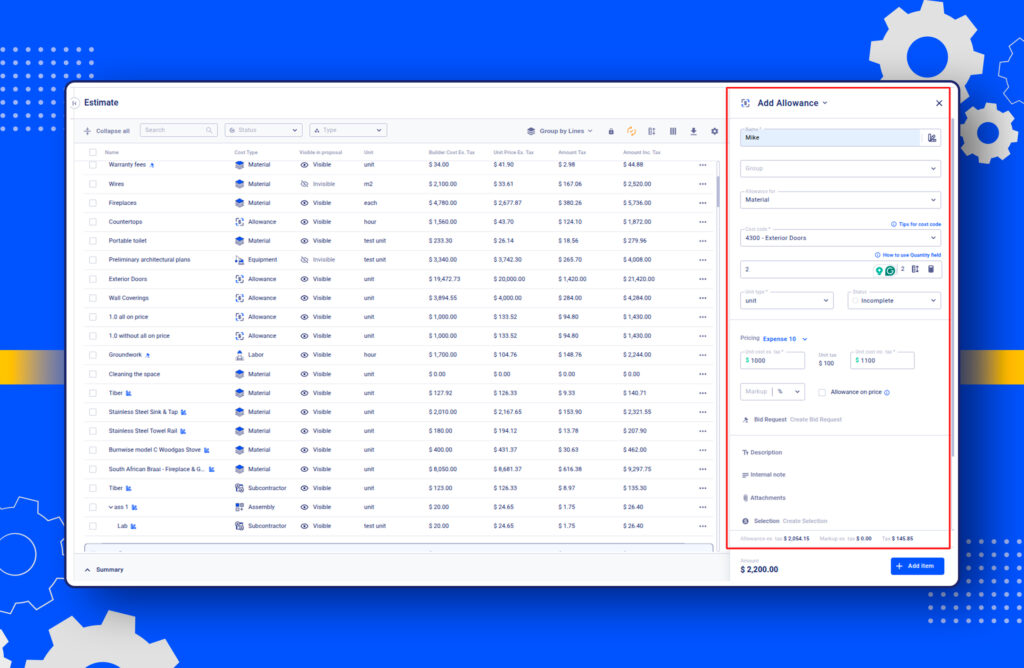
Allowances in construction calculate the price of items that have not yet been finalized during the planning stage. They give flexibility for design choices or size changes, at the same time keeping the overall budget realistic.
If the exact model of the exterior doors hasn’t been selected, the estimator can assign an allowance. For example, $1,100 for an item based on average market prices. This way, the client can later choose a door within that budget or adjust for a higher or lower option.
In practice: Allowances are only useful if they stay visible throughout the project. The most common mistake isn’t setting the wrong amount. It’s agreeing on an allowance during estimation, then losing track of it by the time the client makes their selection.
Apply Markups
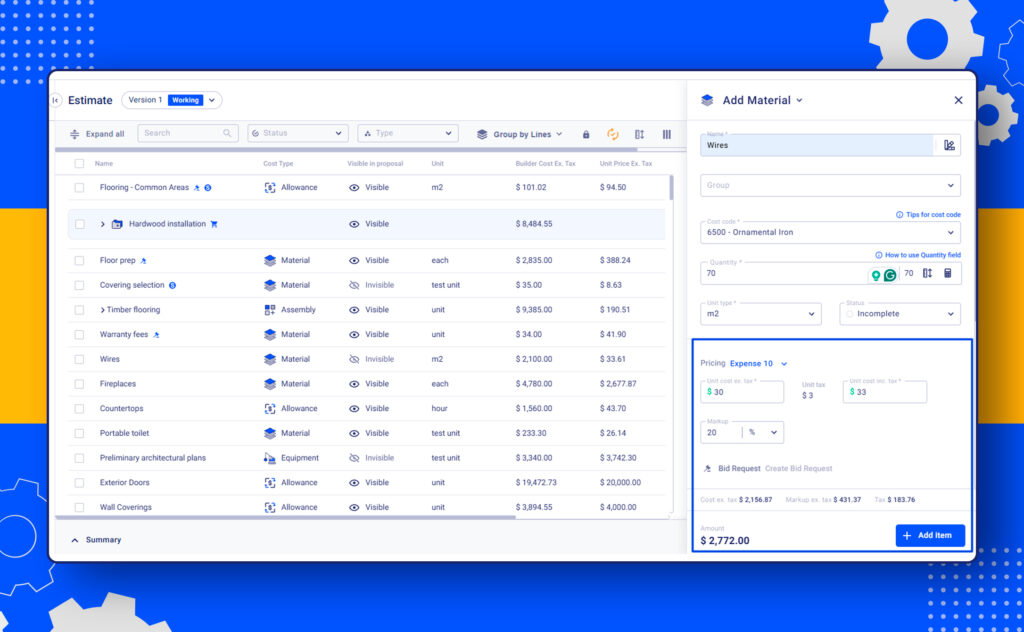
Before turning an estimate into a proposal, the builder adds a markup on top of the direct and indirect costs.
For example, suppose the cost of one meter of electrical wire is $30, you can calculate the total cost plus taxes and apply a 20% markup.
Markups can vary depending on project complexity, market conditions, and risk factors. While some clients may view markups as extra costs, they’re a standard practice.
In practice: In Buildern, you can apply markup on bulk. If you want to apply different rates across cost types, filter the estimate by cost type, select all items, and apply the markup in one bulk edit rather than going line by line.
Finalize Proposal and Submit
After reviewing all calculations, an estimate turns into a professional proposal. Ensure it includes a detailed breakdown of costs, project scope, and timelines.
If using construction software, this can be done via the same platform.
In practice: When your estimate and proposal are in the same tool, turning one into the other takes minutes rather than hours. The proposal is generated directly from the estimate and always reflects your latest version. From there, you control exactly what the client sees and can hide some columns.
Each step in this process is connected. Here’s how Buildern handles the full workflow in one platform.
The more time and accuracy you invest in preparing an estimate, the smoother your project will move forward. There are some practices you should apply to master this tough task.
1. Maintain Clear Documentation
Start with clear, complete project documentation so there’s no room for doubt. Every missing detail in the early stages can lead to costly surprises later.
If something isn’t confirmed, document it as an allowance rather than leaving it blank. This gives both you and the client a clear reference point if there are questions later in the project.
2. Involve Key Stakeholders Early
Bring in project managers, architects, engineers, subcontractors, and relevant vendors before the estimate is finalized. The people closest to the work will catch gaps that an estimator working from drawings alone will miss.
The earlier the conversations regarding some unclear issues happen, the cheaper the corrections are.
3. Track Performance After Project
After every completed project, compare what you estimated against what you actually spent. If your labor hours are consistently underestimated on a particular trade, that’s a pattern you can correct in the next estimate.
Contractors who do this get more accurate over time. The contractor should treat each completed project as data for the next jobs.
4. Think About Contingency as Every Project Carries Risk
No estimate is complete without a risk buffer. A realistic contingency is a deliberate calculation based on unpredictable conditions that may occur during any construction project.
The contractor’s objective should be to price the risk to cover the unknowns without taking the estimate to the point where you’re no longer competitive.
5. Use Construction Software
The estimating process described in this guide is manageable when the tools you use are connected. When they aren’t, the same data gets re-entered multiple times.
The goal is to have as many operations as possible within one software, so as not to be forced to add data manually or face migration issues from the dedicated estimating software to the project management tool. You need to have one source of truth where items from estimates go to bid requests, to purchase orders, bills, etc. In this case, everything is connected.
Buildern features help generate estimates, add taxes, markups, and allowances, send bid requests, and perform other routine tasks. Here’s what Angus Cowan from Angus Cowan Constructions says: “Now, all of my Estimating, Proposals, and Project Management are all located in the one software, and it’s online and has a great mobile app for onsite management of our projects.” Read the full story here.
Conclusion
Every decision made on a construction project, including procurement, change orders, and scheduling, traces back to the estimate. If a general contractor gets the foundation right, the rest of the project has something solid to build on. If there are too many issues with the estimate, the contractor will struggle with the gap between what was promised and what things actually cost during the project.
A structured approach, realistic contingency and allowances, and the right tools will get a contractor as close to an accurate estimate as possible.
Who is Responsible for Construction Estimating?
Depending on the building firm’s operations, it can either be a general contractor or a dedicated estimator. Some companies prefer hiring in-house estimators, while others outsource this task.
Why is Estimating Important for a Project’s Success?
This helps keep projects on budget and schedule. Estimates determine project costs upfront. Without them, there is a risk of delays, cost overruns, and profit losses. Accurate estimates prevent financial disasters and allow informed decision-making about scope, labor, and materials.
What Is Construction Estimating Software?
Digital tools can help contractors calculate project costs more accurately and efficiently. The software can be used to automate quantity takeoffs, apply current material and labor rates, and generate detailed cost breakdowns. Popular features include catalog costs, bid labeling, and report generation. This makes the estimating process faster and more precise than manual methods.
How to Choose Construction Estimating Software?
Look for software that integrates estimating with project and financial management. In this case, estimates flow directly into budgets, project tracking, and other modules. It saves time and also removes the need to subscribe to multiple disconnected tools.
What is a Takeoff in Construction Estimating?
Takeoff is a tool used to measure different areas to identify quantities of materials involved in a construction project. It’s a preparatory step for an estimate.
Should General Contractors Share Detailed Cost Breakdowns with Clients?
This depends on the general contractor’s business model and relationship with clients. Some contractors provide detailed line items, including the markup, to build trust and justify costs. Others prefer pricing without it to avoid client micromanagement of individual line items.
Last updated September 2026 Estimating is one of the first places where a small construction business starts to feel operational pressure. A missed quantity, outdated labor rate, weak markup structure, or rushed proposal can follow the job from bid day into the budget, schedule, and final margin. That is why I treat estimating software as […]
Updated in September 2026 Small construction businesses usually feel software problems before they name them. Construction management software should reduce that pressure. For a small builder, the right system connects estimating, scheduling, budgeting, change orders, documents, and invoices in a way the team can actually use. In this review, I’ll compare 8 construction management tools […]
Have you ever tried rolling out new software across a construction team and felt the resistance before you even clicked “setup”? I have. And over time, I learned that adopting billing software is never about pushing everyone into a new system. It’s more about how you set up the foundation so the first project runs […]






![Construction Estimating Software for Small Businesses: 7 Tools Compared [2026 Update]](https://buildern.com/resources/wp-content/uploads/2025/12/BLOG_COVER_Best-Construction-Estimating-Software-for-Small-Businesses-2026-768x501.jpg)